
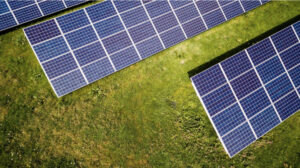
 Solar Farms will be an essential component of zero carbon-emitting energy production to combat climate change and reach net zero but the question of these being placed on valuable agricultural land and the loss of food production and food security frequently arises as an objection.
This has come sharply into focus as the current government is pursuing a policy of using farmland for solar energy production and has approved three massive projects in the east of England, formerly blocked by conservative ministers.
In addition, plans are being unveiled for several large solar farms in Norfolk: High Grove, a 4,000-acre scheme near Dereham and Swaffham; the Droves, spanning 2,800 acres on an adjoining site; a 5,000-acre project near Gissing; East Pye, 2,700 acres, and a further 2,500 acres both near Long Stratton – all dwarfing the UK’s current biggest solar farm, which spans roughly 260 acres.
Pre-development considerations
Prior to any development, an assessment is made of the agricultural value of the land and its use for arable crops, meat or dairy production. The National Planning Policy Framework states that poorer quality land should be used in preference, taking into consideration factors such as grid access, drainage etc.
Global warming has already reached 1.4 degrees above pre- industrial levels, precariously close to the 1.5 degrees limit of the 2015 Paris Agreement. Linked to this, the rising need for electricity with the expanding amount of domestic electrical goods, the planned building of data centres demanding more power and cooling (projected to increase in capacity by over 20% in the next three years) and electrified transport, the demand for cleaner energy is increasing.
Although overall, the consumption of household electricity has dropped since 2019, due partly to a warming climate, the cost per unit has risen significantly making household bills over 40% higher than 2021. In 2022 the East of England had the highest electricity consumption per household in Britain. But solar energy along with wind is now the cheapest energy to be produced, potentially giving households the opportunity for lower bills.
The Good News
And the good news is solar farms and food production are not mutually exclusive. For example Japan has nearly 2,000 agrivoltaic installations growing 120 different crops beneath the panels; sheep can also graze underneath them.
We are currently facing twin climate and ecological emergencies and the solutions are intrinsically linked. The significant new and upgraded energy infrastructure required to support the transition to net zero must be planned, designed, and built with protecting and restoring biodiversity and natural ecosystems as an essential requirement.
Solar farms should not be located where they will harm existing areas of biodiversity value but if carefully designed, solar farms should provide great benefits for wildlife. In addition to this, the use of solar panels on current and new-build residential and businesses should be maximised.
And finally
Generating solar power can provide income for farmers with erratic yields due to weather extremes. Even government plans to scale up solar use in line with net zero will only take up 0.5% of land currently used for farming, roughly half that taken up by golf courses.
Fossil fuel generated electricity is directly linked to climate change which in turn impacts food production. The need for zero carbon cheaper produced energy has never been greater.